Infrastructure Reuse Will No Longer Be an Option: The Impact of the New European Framework on B2B Fiber Sales
In May 2024, Regulation (EU) 2024/1309, known as the Gigabit Infrastructure Act, entered into force. Its macro objective is to reduce the cost of deploying very high-capacity networks across the European Union. However, its real impact—directly applicable starting in November 2025—goes far beyond mere regulatory compliance: it will completely redefine how operators plan, budget, and sell B2B fiber.
One of the central elements of this regulation is the Single Information Points (SIPs). These national platforms will require network operators, utility companies (gas, electricity, water), and public administrations to publish georeferenced information on their existing physical infrastructure so that any actor can request access. In Spain, the Ministry for Digital Transformation has just closed (on September 4th) the public consultation phase for the ministerial order regulating our SIP1. The market clock is already running.
How Does This Affect Telecommunications Companies?
Until now, knowing whether a third-party duct, pole, or conduit was available in an area depended largely on bilateral agreements, manual inquiries, and unpredictable wait times. With the rollout of the SIP, this information must be available in an electronic, standardized format and under strict deadlines (10 business days to provide minimum information). Infrastructure reuse shifts from a simple “best practice” that some operators executed better than others to an enforceable legal obligation.
For commercial and engineering teams selling B2B connectivity, the business implications are profound and rest on three main pillars:
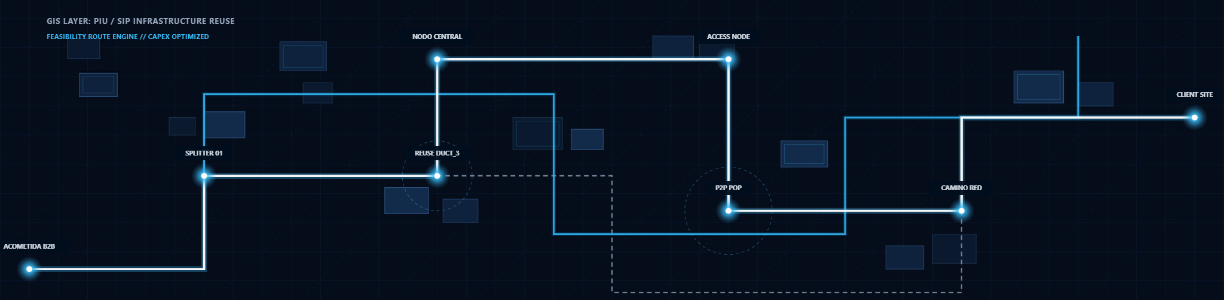
- A shift in the starting point of network design (and CAPEX): Before budgeting new civil works for a dedicated link, it will be mandatory to check what reusable infrastructure exists within the route radius. Ignoring this new layer of public data will de facto mean quoting above actual market prices.
- New standards for commercial agility (Time-to-market): If the law mandates resolving infrastructure inquiries within a maximum of 10 business days, corporate clients requesting a P2P link will no longer accept suppliers taking weeks to internally confirm technical feasibility and drop-connection costs. Expectations for speed are set to skyrocket.
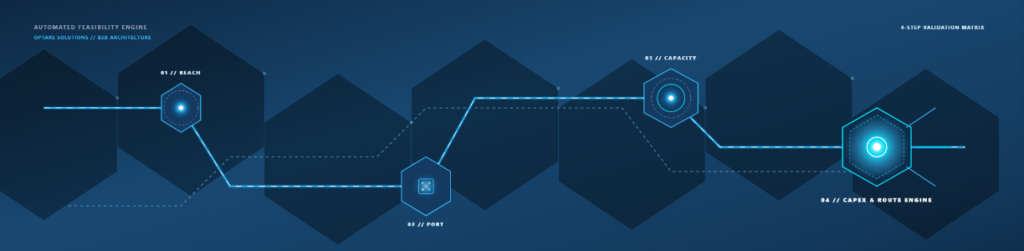
- The competitive advantage of automation: Operators whose OSS systems and pre-sales processes are prepared to systemically ingest and analyze this information—rather than relying on manual, ad-hoc methods—will be the first to put a firm proposal on the customer’s table.
At Optare Solutions, we have been monitoring this regulatory paradigm shift for some time. Based on our experience in process automation, we view B2B pre-sales architecture as needing a clear evolution: prioritizing infrastructure reuse must become the primary automated criterion in feasibility calculations, rather than an engineering last resort.
For network and duct owners, automating reporting processes and ensuring reliable inventory digitization will be essential to avoid ballooning compliance costs under this new regulation.
Regulation will democratize access to physical data, but true market value will lie in the technical capability to process it at commercial speed. Are your operator’s feasibility and quoting processes prepared to integrate this new geospatial intelligence in seconds, or will they remain reliant on manual validations that stall deal closures? Anticipating this question is currently the best strategy to capitalize on the new regulatory landscape.
- As a Ministerial Order, its processing does not require approval or a vote in the Congress of Deputies. Following the public consultation, the text analyzes submitted observations and incorporates mandatory reports (such as the one from the CNMC), so its final approval via ministerial signature and subsequent publication in the BOE (Official State Gazette) is typically expected within two to three months after the process closes. ↩︎